


Footprints in the garden
13/03/2026
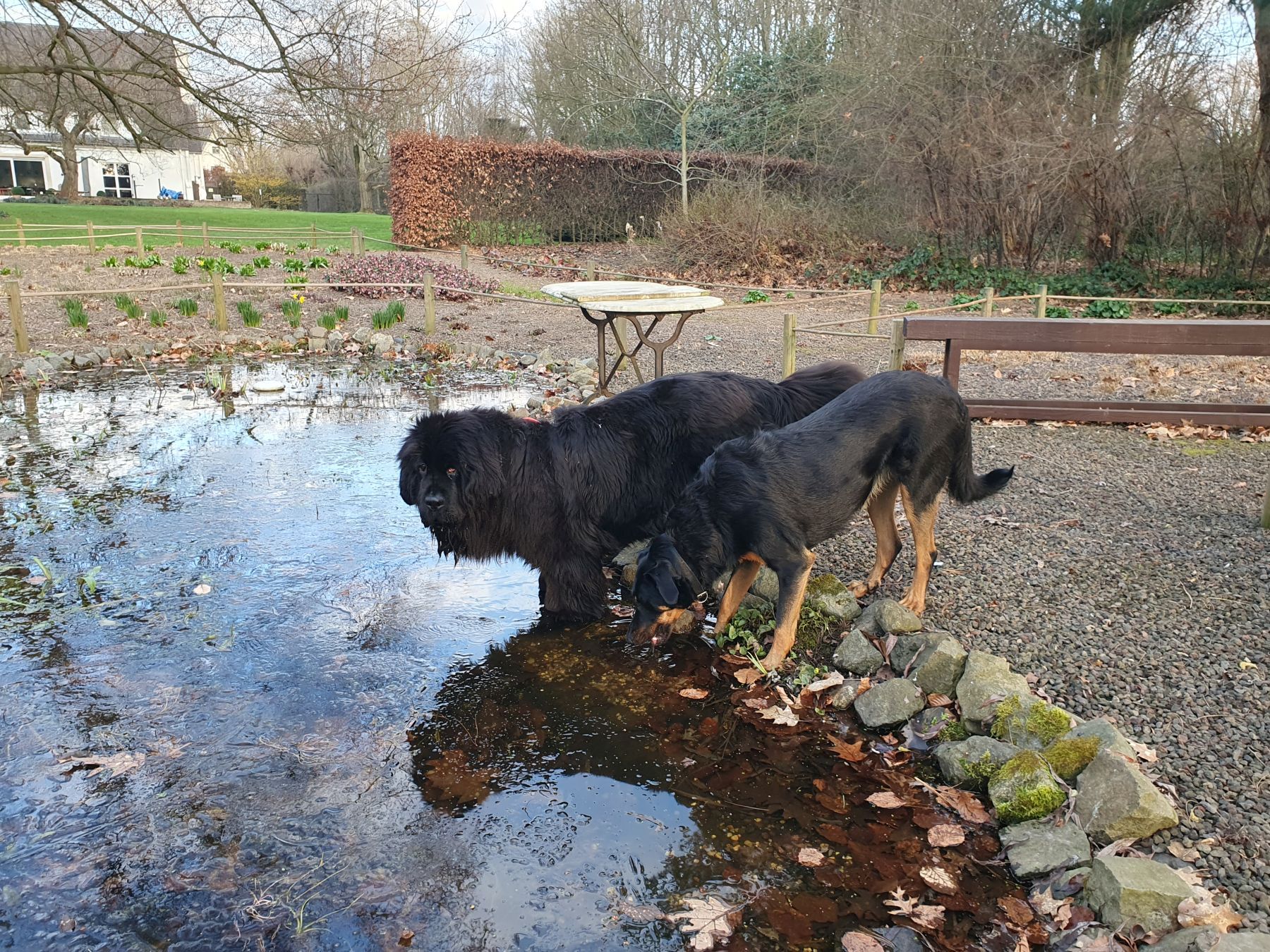
I am fascinated by biodiversity and by wildlife, big and small. At the same time, I have been a big dog fan all my life. Since I was 8, we have had dogs, mostly large dogs - L & XL between 35 and 60kg - soulmates who are part of the family.
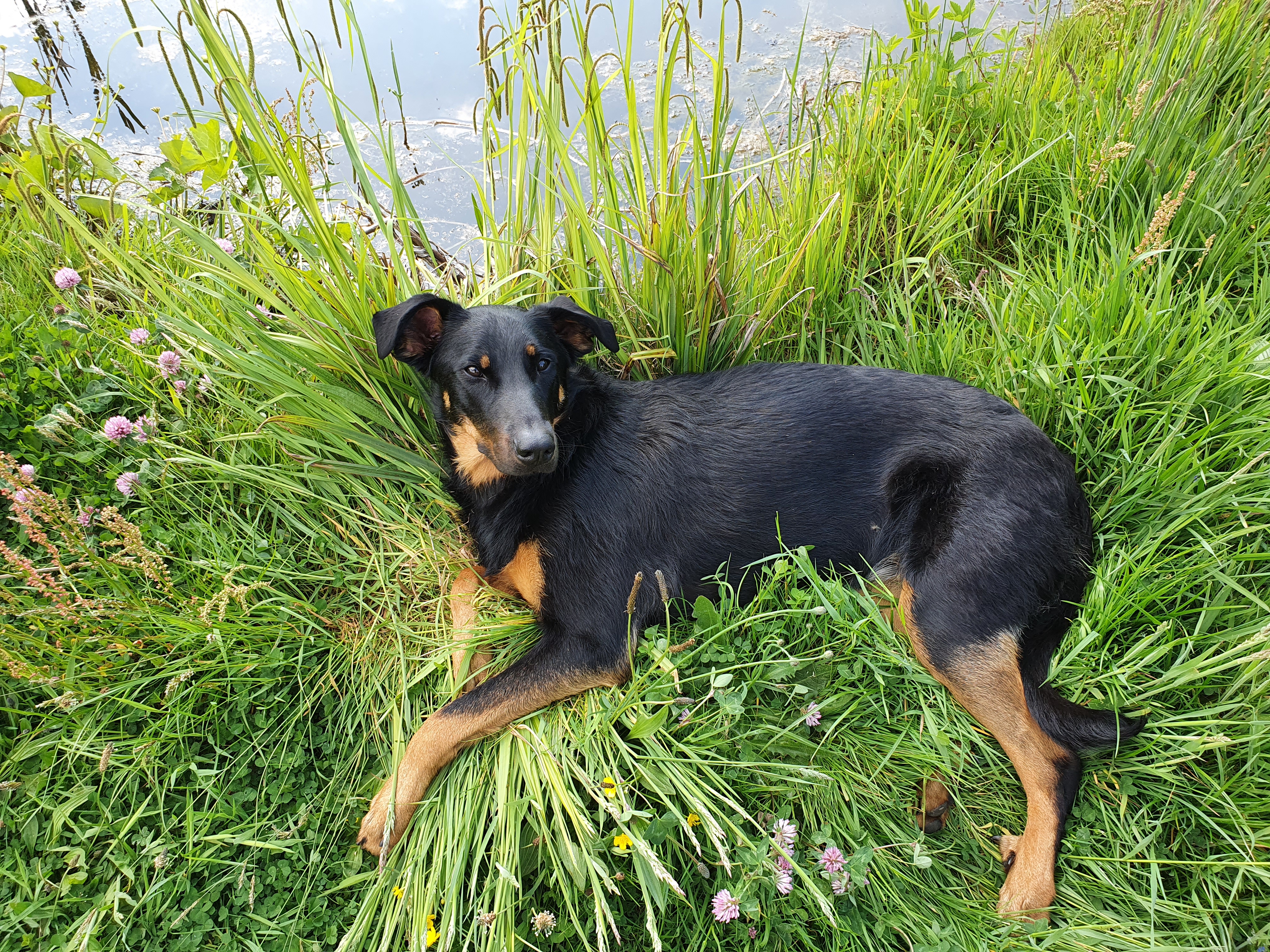
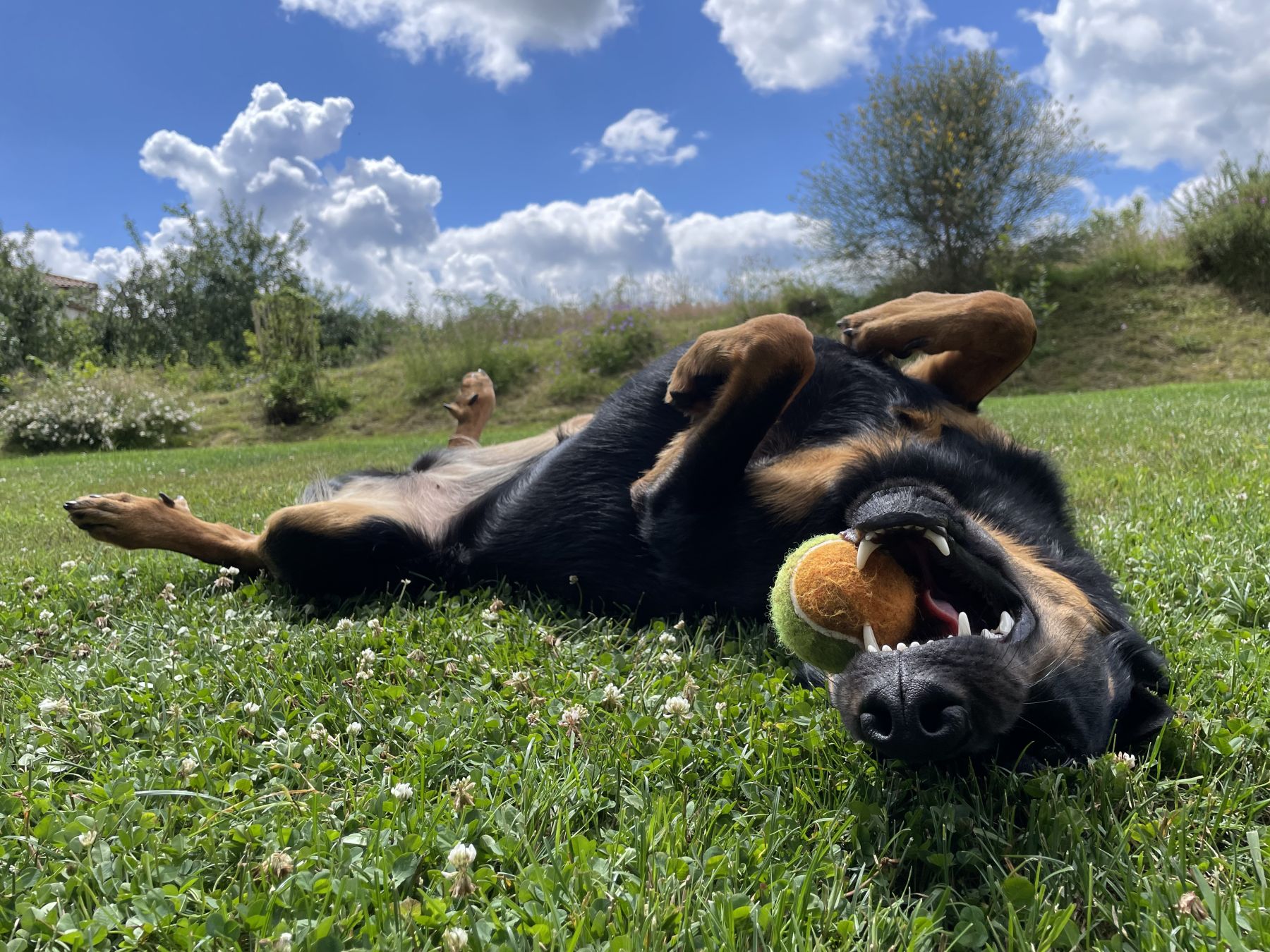
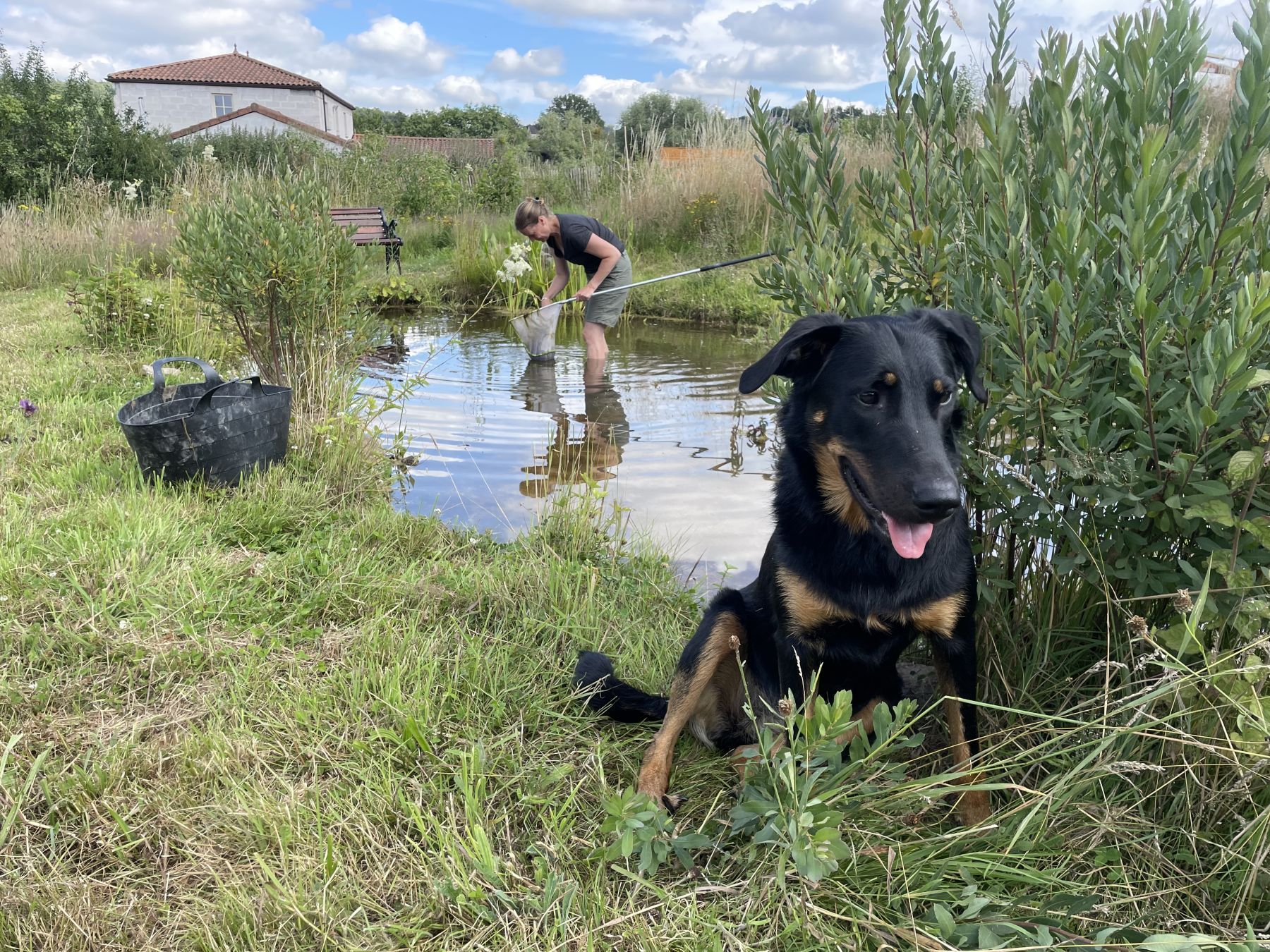
Of course, pets have an impact on your garden, and thus also on an ecological garden. As a puppy, our french shephard Uma enjoyed snatching our brand-new crocuses one by one - bye bye first spring bloom. When I plant, she likes to come and sit against me right on the very plant I have just lovingly and carefully planted. In dry summers, brown spots in the lawn show where she pees. And when our vole population pokes their heads above the grass, Uma enthusiastically starts digging. She also loves lying down on the soft groundcovers in cool shady corners.
For some reason, the song of the black woodpecker and the tawny owl invariably provokes barking, all other birds are allowed to sing. Fortunately, the owl and woodpecker don't seem to mind, as we hear them daily. How to explain your 4-legged watchmen the principle of a 1,000-species garden, she follows her own instincts.
Every dog is different, of course, and so the impacts varies. Uma usually follows lawn paths neatly, unless a ball lands in the flower meadow. She knows she is not allowed in the vegetable garden. Once in a while a plant will fall down or some long grass will fall flat but that's not too bad. And a new hole in the meadow is much less noticeable than in a tight lawn. It doesn't stop us from developing our garden the way we want.
One compromise though. We fenced our entire garden, with passages for hedgehogs and other small mammals, because with a forest full of wildlife as a neighbour, it would otherwise be a bit difficult to contain Uma's curiosity.
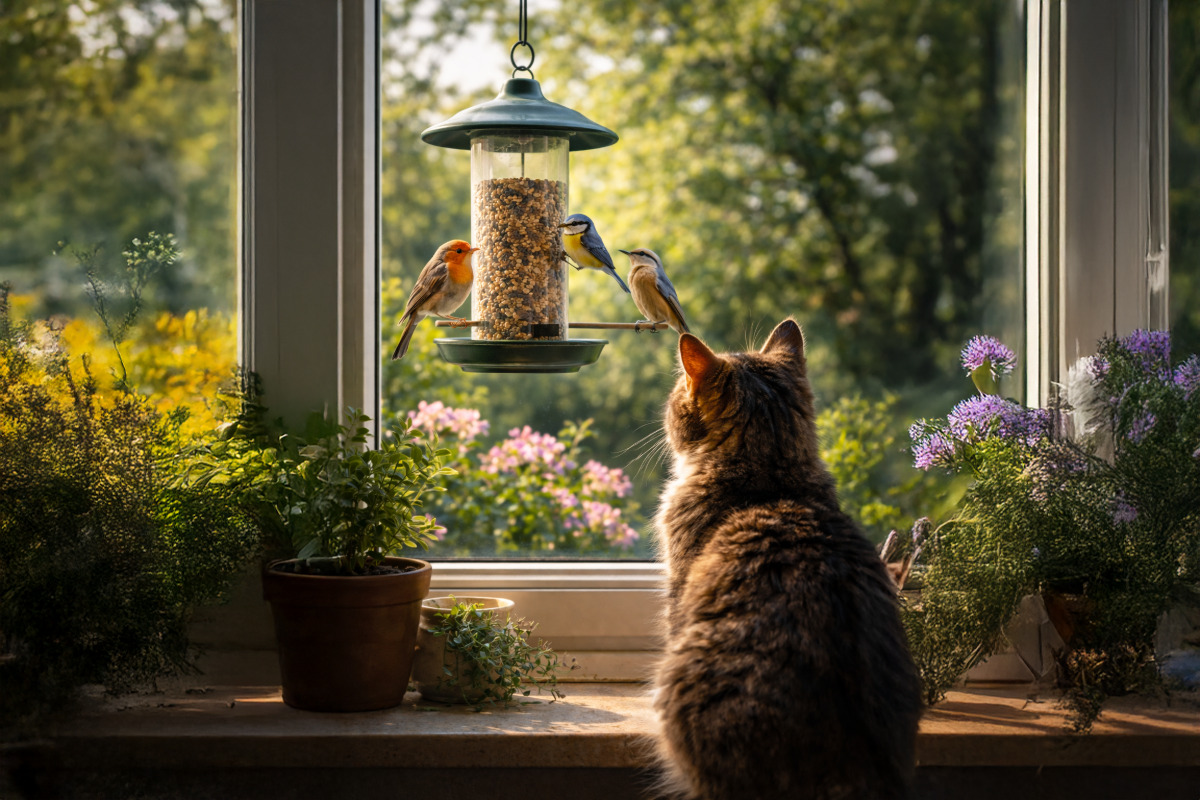
I am entering my 4th year as a volunteer at the Creaves Andenne wildlife shelter. In terms of injured birds, cats are in the top 3 causes. Their hunting instinct is hard to curb, frogs and mice are also among the victims, although the latter is rather an advantage for some.
So it is best to always feed birds at height and in an open area so that your little hunter cannot sneak close unnoticed. Provide sufficient shelter in your garden with shrubs and hedge plants so birds have an escape route. Spiny species such as hawthorn, blackthorn, holly and dog rose are particularly effective in this regard. Some people tie a bell to their cat so that prey animals are warned or keep their hunters inside more pre-emptively during the period when young birds fly out.Cats don't like to walk on ground covers and wood chips, so that can be used as a cat-repellent. Lemon-scented plants (lemon geranium, lemon thyme, lemon mellows and lemon verbena) is also effective to keep cats away. Catnip, on the contrary, contains nepetalactone, a substance that makes many cats euphoric so you can create an attractive cat corner. Gamander, maiden pink and Irish moss also have that effect. That adds another dimension to the principle of 'the right plant in the right place'. Rolling, headbutting, drooling, sprinting - it's all part of the game but sometimes leads to squashed plants. Cats like naked earth so it is best to screen off a vegetable garden box and bed for protection.
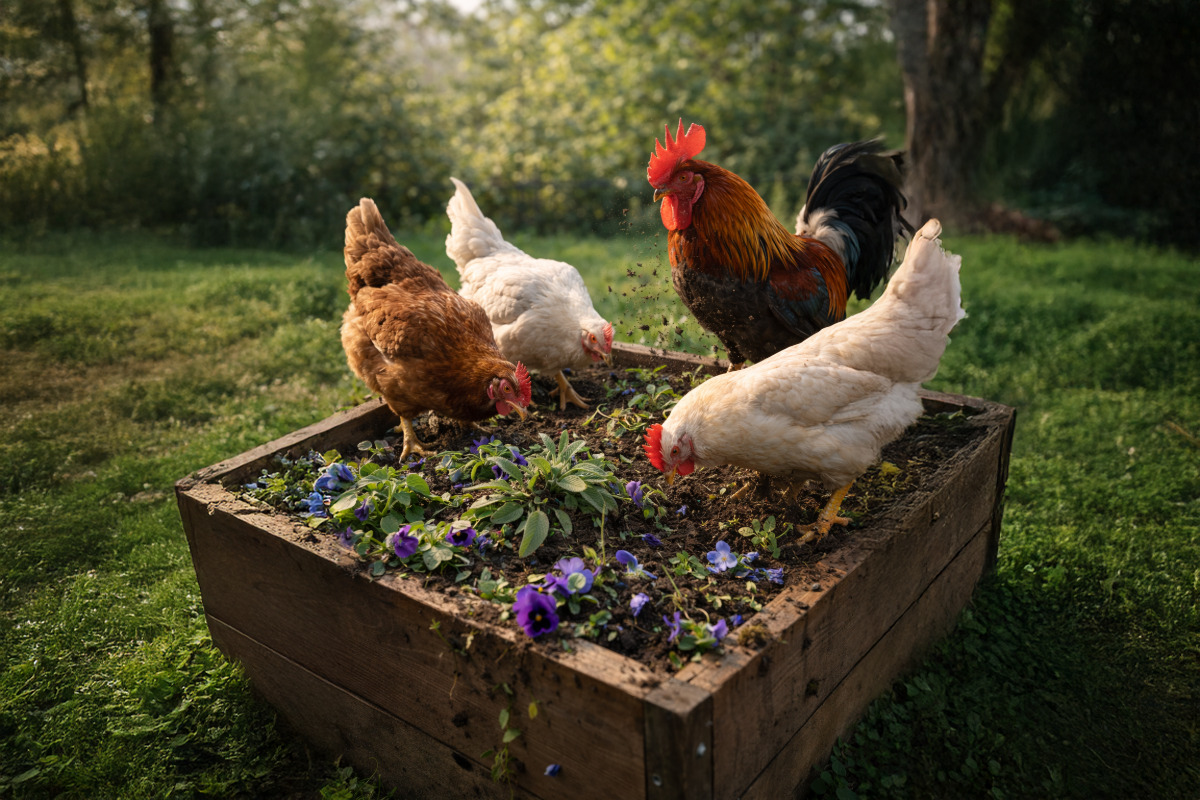
Nowadays more and more people have free-roaming chickens in the garden and there are good reasons for this. Chickens eat snails and can be used as natural pest control. They are mini composters, their manure is valuable on the compost heap and, of course, they also provide us with tasty fresh eggs daily. By the way, you can use those eggshells for lime-loving plants. You can also throw leaves and prunings into the chicken run and they will take care of shredding. Nothing so easy. Chickens as unpaid garden workers, that's great - and it's cosy too!
But ... there is also a downside: their constant free-range scratching behaviour can cause major havoc in your planting. They eat many young plants or destroy their roots. So it is best to limit their walking space or wait until the plants are large and robust enough so that their damage is contained. In an ecological garden, there is quite a lot of spontaneous vegetation - aka weeds - so one cannot possibly expect chickens to distinguish between what you want to keep or not. Even when sowing a flower meadow, it is wise to keep them away as they love seeds. So it is a matter of putting them to good use in ' a controlled fashion'.
As soon as you add a dog, cat or chicken to your ecological oasis, your garden turns from a harmonious ecosystem into a living experiment. An ecological garden is all about cooperation with natural processes. Pets are in a sense... natural processes too. Only slightly more enthusiastic.
A garden where animals can move freely is livelier, more playful and often even more robust. By clever design - zones, strong planting, natural partitions - you can create a place where both biodiversity and your pets flourish. And in the end, that may be the essence of sustainable gardening: not striving for perfection, but living together.
Comments
- Interessant. Onze jachthond houdt van paden. Als hij een nieuwe looproute kiest en het is mogelijk leggen wij er boomschors. Zo weet hij dat hij daar mag lopen, dat wij het ok vinden. Er zijn 9 paden in de tuin die in grote bogen in verbinding staan met elkaar. Super voor de hond en ook heel mooi en goed voor ons (Veerle)
- Zalig Veerle, wat een leuk concept, dank om te delen. Je jachthond beslist zo mee de inrichting, dat is pas teamwork! Als je op sociale media zit, post zeker een foto op onze Facebook of Instagram pagina! (An IMBY)
Add a comment